Why Austin Is Called the Live Music Capital
Austin earned the title "Live Music Capital of the World" on August 29, 1991, when the city publicly staked its claim based on the number of live music venues per capita.
With 250+ venues hosting live shows across town, this distinction is still widely used today in local tourism and culture coverage.
You'll find everything from historic honky-tonks to cutting-edge festivals like SXSW and ACL. The city's unique blend of musical heritage runs much deeper than just impressive statistics.
The Birth of Austin's Musical Identity
Austin's musical heritage stretches back to the late 19th century, when German immigrants set up the city's first dedicated music spaces.
This German diaspora influence laid essential foundations with Turner Hall (built in the early 1870s) and beer halls like Scholz Garten (est. 1866) that remain active today.
These spaces created Austin's earliest live music ecosystem. Long before the 1970s elevated the city's musical reputation, Austin already had a thriving dual music scene with university-centered orchestras alongside working-class honky tonks.
By the Numbers: Austin's Unparalleled Venue Density
The raw statistics behind Austin's music scene tell a compelling story that few cities can match. With 250+ live music venues spread across distinctive neighborhoods like the Red River area and South Congress, Austin maintains an unusually concentrated live-music ecosystem for its size.
This density creates strong conditions for emerging artist development, offering numerous stages where newcomers can build audiences alongside established acts. From Antone's historic blues traditions to electronic sets in warehouse spaces, the city's venue diversity spans all genres. Many of these venues, like The Saxon Pub, have established themselves as songwriter's havens where both established and emerging artists can showcase their talents.
Despite this abundance, venue sustainability challenges persist. Many smaller venues operate on razor-thin margins, and shifts in costs and consumer habits can make live music harder to sustain. Yet this concentrated ecosystem remains crucial to Austin's identity as the "Live Music Capital of the World."
From Honky Tonks to High-Tech: Evolution of Austin's Sound
Tracing back nearly 150 years, Austin's musical identity took root in German beer halls before blossoming into the diverse soundscape you'll experience today. From Scholz Garten's grassroots beginnings to the club circuits that brought touring artists through town, Austin's foundation was built on authentic expression.
The 1970s transformed the city as Willie Nelson's move to Austin helped spark the outlaw country movement, while venues like Armadillo World Headquarters fostered genre-blending innovation.
This fusion was instrumental in uniting diverse audiences, bringing together conservative cowboys and liberal hippies through the universal language of music. By the early 1970s, Stevie Ray Vaughan had also moved into the Austin scene, building a following on local stages before his wider breakthrough.
Today's scene bridges tradition and technological innovations, with SXSW and ACL festivals attracting global audiences. What remains constant is Austin's commitment to creative freedom—a thread connecting Threadgill's honky-tonk days to today's digital-age performances.
How City Policy Turned Music into Economic Power
Behind every thriving music scene stands a framework of thoughtful policy decisions, and Austin's transformation into an economic powerhouse began with intentional government action. You'll find a city that leverages its musical identity through strategic zoning, permitting policies, and economic incentives that protect venues while balancing community needs.
The city's approach combines grassroots initiatives with formal economic development through:
- Cultural Asset Mapping to identify and preserve essential music spaces
- Integration of music within broader creative economy strategies
- Tax revenue reinvestment creating a self-sustaining growth cycle
- Place-based development targeting music districts
This framework has generated thousands of jobs, with the creative sector producing over $71 million in City tax revenues (2010) while reinforcing Austin's music-driven brand.
SXSW and ACL: Festivals That Changed a City's Destiny
Two music festivals transformed Austin from a college town with a quirky music scene into a global cultural destination. SXSW draws hundreds of thousands of participants across its music, film, and interactive programming, and it continues to pump major spending into the local economy.
This festival-driven economic growth prompted strategic municipal investments as officials recognized the potential. SXSW has grown dramatically since its 1987 founding, evolving from a small gathering to a massive conglomeration of film, interactive media, and music events.
Meanwhile, ACL expanded to accommodate roughly 450,000 attendees across two weekends, further cementing Austin's reputation as a premier live music hub.
When you visit during these events, you'll witness the city operating at full cultural volume, with packed venues, late-night sets, and visitors building entire trips around live music discoveries.
Willie, Stevie Ray, and Janis: Legends Who Shaped the Scene
While festivals have propelled Austin's musical status globally, the city's sound was also shaped by artists whose careers intersected with Austin's stages and culture. Willie Nelson helped redefine the city's modern music identity, Stevie Ray Vaughan rose through Austin's club circuit, and Janis Joplin famously spent time at the University of Texas at Austin before leaving Texas for the wider music world.
These genre bending innovators influenced Austin through their performances, scenes, and the wider mythology of Texas music culture.
Their collective impact on Austin's musical identity includes:
- Creating Austin's signature cross-genre musical environment
- Elevating the city from regional outpost to national music destination
- Bringing national attention through televised performances like Austin City Limits
- Bridging diverse audiences and cultural movements
You can still feel their influence today in every venue, from historic clubs to modern festival stages. Willie's pivotal decision to move to Austin in the early 1970s helped rejuvenate the local music scene as he found inspiration in the city's emerging counterculture.
Diverse Communities, Diverse Sounds: The Cultural Mosaic
Austin's identity as the Live Music Capital emerges from its rich cultural diversity, where a vibrant tapestry of communities shapes the city's distinctive sound. When you explore the city, you'll find Hispanic influences driving Tejano and Latin fusions, while Black musicians and venues helped define jazz, blues, soul, and R&B traditions that continue to inform Austin's sound today.
The city's multicultural events and neighborhood music hubs showcase this diversity year-round, with each area serving as a cultural anchor for specific musical traditions.
As Austin's population continues to grow, these communities create cross-cultural collaborations that constantly reinvent the live music scene, ensuring the city's soundtrack remains as diverse as its people.
Beyond the Stage: How Music Permeates Austin's Daily Life
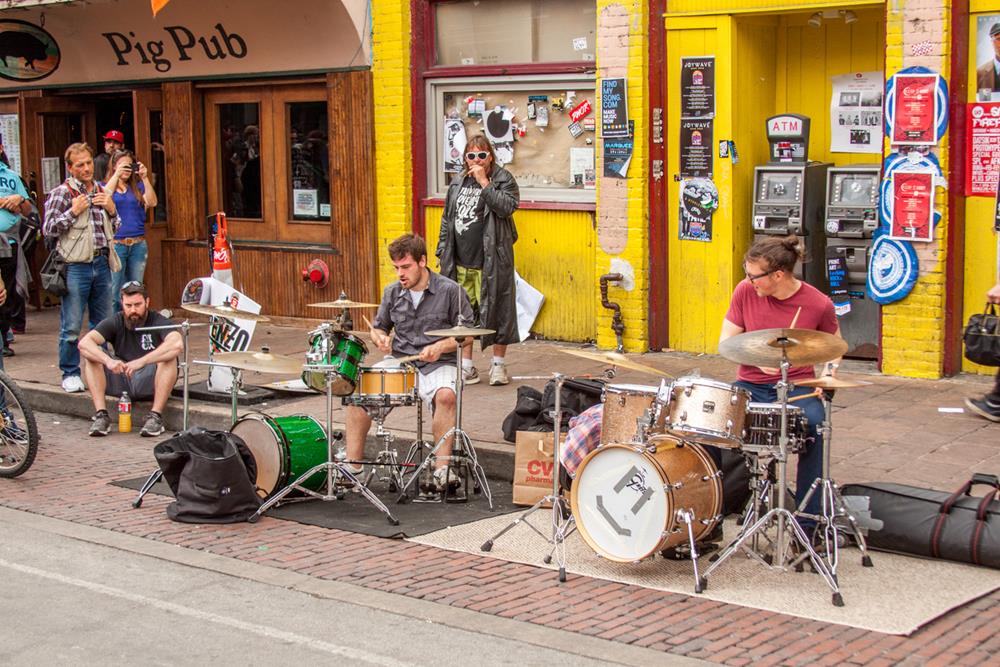
The heartbeat of Austin isn't confined to concert halls or festival grounds—it pulses through the city's everyday spaces. You'll encounter live performances while grabbing coffee, shopping, or simply walking down South Congress. Small independent venues and grassroots music collectives have transformed routine activities into cultural experiences.
With 250+ venues scattered throughout the city, Austin's musical footprint extends into virtually every neighborhood and business district.
When you live in Austin, music becomes part of your daily rhythm:
- Your neighborhood coffee shop might host impromptu acoustic sessions
- Dinner often comes with a side of live performance at local restaurants
- Shopping trips regularly include stumbling upon street musicians
- Work meetings sometimes happen in venues doubling as coworking spaces during daylight hours
This integration makes music not just entertainment but a functional element of Austin's community fabric, accessible across all demographics and woven into ordinary moments.