Interesting Facts About Everyday Mysteries Explained by Science
Everyday life is full of things we rarely question. The sky changes color, soap cleans without much thought, ice floats in a glass—and most of the time, we simply accept it. But beneath these ordinary moments are scientific processes that are far more complex than they appear.
What’s changed in recent years is how people engage with these mysteries. Science is no longer confined to classrooms or textbooks—it’s everywhere. Short videos, social media posts, and quick explainers have turned everyday phenomena into moments of curiosity and discovery. The result is a shift in perspective. Things that once felt routine now feel worth understanding. And once you start noticing them, it becomes hard to stop.
Why the Sky Is Blue (and Orange at Sunset)
The color of the sky is one of the most familiar yet overlooked phenomena. During the day, it appears blue—but at sunset, it transforms into shades of orange, red, and yellow. This happens because sunlight contains all colors, each traveling in different wavelengths. Blue light has a shorter wavelength, which means it scatters more easily when it interacts with molecules in the atmosphere.
As a result, blue light spreads across the sky, creating the color we see during the day. At sunset, the situation changes. Sunlight has to travel a longer distance through the atmosphere before reaching your eyes. Along the way, shorter wavelengths like blue and violet are scattered out, leaving behind the longer wavelengths—reds, oranges, and yellows.
What makes this especially interesting is how familiar it feels despite its complexity. It’s something people see every day, yet rarely think about—until it’s pointed out. That balance between simplicity and depth is what makes it such a compelling everyday mystery.

How Soap Actually Removes Dirt and Bacteria
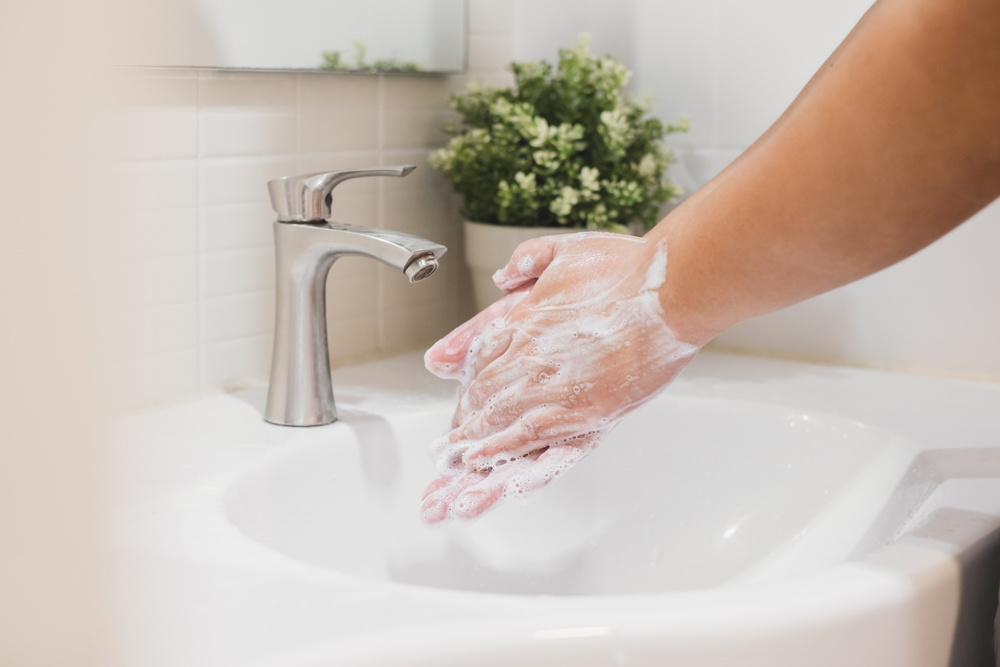
Soap's cleaning power comes down to a clever molecular trick. Each soap molecule has two distinct ends: a water-loving head and a grease-loving tail. When you wash, the tails latch onto oily dirt while the heads stay connected to water, bridging two substances that normally won't mix.
Soap also breaks water's surface tension, letting it penetrate deeper into pores and dislodge stubborn grime more easily. Through micelle dynamics, soap molecules encircle dirt particles, trapping them in tiny clusters that rinse away cleanly. Against bacteria and viruses, soap triggers membrane disruption by driving hydrophobic tails into lipid bilayers, physically tearing pathogens apart.
Scrubbing for at least 20 seconds maximizes this effect, reducing harmful bacteria markedly compared to water alone. Once micelles form, they prevent the removed dirt and germs from reattaching to any surface until they are fully carried away during rinsing.
Why Ice Floats Instead of Sinking
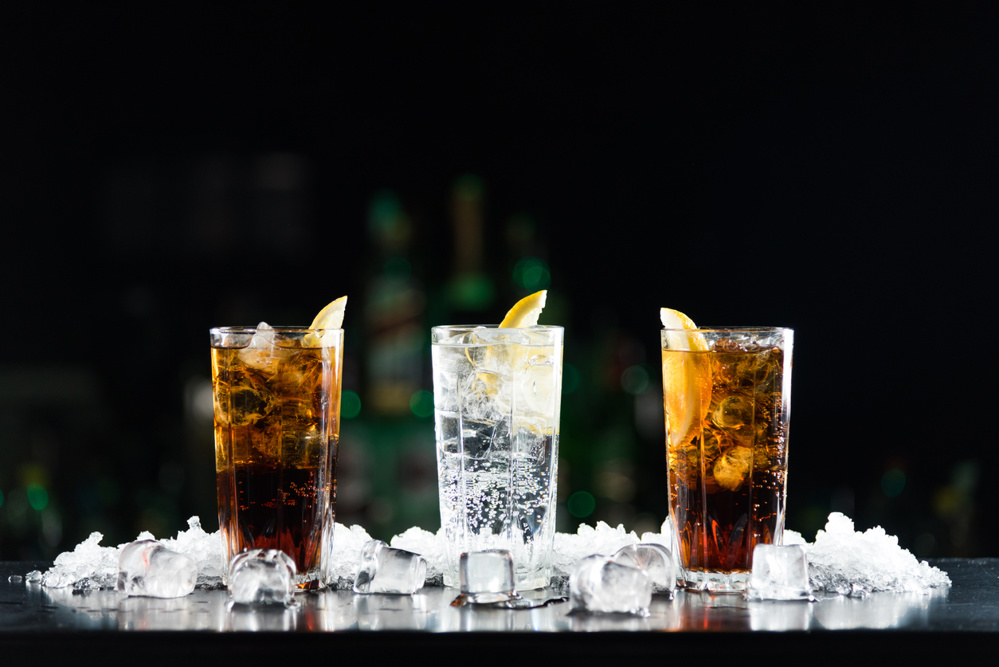
Most people never question why ice cubes bob at the top of a drink instead of sinking to the bottom, but the answer reveals one of water's most unusual properties. When water freezes, its molecules lock into a hydrogen lattice, creating gaps that make ice less dense than liquid water at 0.9 g/cm³ versus 1 g/cm³.
This density difference drives buoyancy equilibrium, where displaced water's weight matches ice's weight, leaving roughly 10% visible above the surface. Tools that rely on unbiased number generation can even simulate probabilistic outcomes tied to density-based physical models used in scientific research.
The consequences extend far beyond your glass:
- Ice insulates lakes, protecting aquatic life beneath
- Expansion cracks rocks and bursts pipes
- Surface freezing prevents lakes from solidifying completely
- Ocean ice sinking creates global circulation patterns
- Floating ice distributes nutrients worldwide
Remarkably, if water were fully confined during freezing, the pressure generated could reach 790 megapascals, a force so extreme that no known material can fully withstand it. Similarly, the human eye relies on precise pressure and fluid dynamics, as the cornea's avascular design and aqueous humor mechanics work together to maintain optical clarity and direct light accurately toward the retina.
What Would Happen If Ice Sank to the Bottom?
While floating ice seems trivial, it's one of nature's most critical engineering feats—remove it, and the consequences cascade fast. If ice sank, you'd witness bottom freezing transform lakes and oceans into crushing death traps. Solidified ice would pile upward, destroying corals, sponges, clams, and seaweed beneath its weight. Fish would flee to the surface, becoming easy prey for birds and fishermen.
Without surface ice insulating the water, winter cold would penetrate far deeper, accelerating total solidification. Summers would then swing violently opposite—unshielded water absorbs solar heat rapidly, dropping oxygen levels and fundamentally cooking aquatic life.
This aquatic collapse wouldn't stay localized. Oceans worldwide would destabilize, disrupting food chains, trapping submarines, and fundamentally breaking Earth's water cycle beyond seasonal recovery. This scenario is only hypothetical because water molecules form a crystalline lattice structure when freezing, creating empty spaces that make ice less dense than liquid water.
Put your knowledge to the test with more fun science trivia!
The Ocean Makes Half the Oxygen You Breathe
Every breath you take has a hidden co-author: the ocean. Through marine photosynthesis, tiny organisms produce up to 80% of Earth's oxygen. You'd never guess your lungs depend on microscopic life drifting in seawater. Here's what's driving this process:
- Prochlorococcus bacteria alone generate up to 20% of global oxygen
- Marine phytoplankton anchor entire ocean food webs
- Iron scarcity from climate change slows phytoplankton growth
- Plankton decline creates dangerous hypoxic dead zones
- Ocean life consumes roughly the same oxygen it produces
The oxygen you're breathing now accumulated over hundreds of millions of years. Climate change threatens that balance by disrupting iron delivery and weakening phytoplankton populations—the very organisms keeping your atmosphere breathable. When algal blooms die off, the resulting decomposition can rapidly deplete oxygen levels, creating hypoxic dead zones that are unable to support most marine life.
How Sea Turtles Use Earth's Magnetic Field as a GPS
The ocean's microscopic navigators keep your atmosphere breathable, but sea turtles pull off something equally astonishing without a single piece of technology: they read Earth's magnetic field like a GPS. Magnetite crystals in their heads detect both field intensity and inclination angle, giving them latitude and longitude simultaneously. That's a true bi-coordinate system.
Hatchlings begin magnetic imprinting at birth, memorizing their natal beach's unique magnetic signature. Years later, they use map-based navigation to return to that exact coastal site across thousands of miles. Loggerhead Adelita crossed 9,000 miles of open Pacific using this system alone.
Wallace J. Nichols tracked her remarkable transoceanic journey using a satellite tag, providing the real-world evidence that made scientists question how such navigation was even possible. Scientists like Ken Lohmann confirmed this by flipping artificial magnetic fields, instantly reversing turtle swimming direction. Researchers now suspect magnetic bacteria in tear ducts may also contribute to this built-in compass.
Why Your Stomach Acid Can Dissolve a Razor Blade
Your stomach harbors one of the body's most corrosive environments — hydrochloric acid ranging from pH 1.5 to 3.5, strong enough to dissolve certain metals. A 1997 study revealed fascinating acid corrosion timelines affecting blade safety:
- Razor blades lost 37% of their weight within 24 hours
- Blades became fragile and breakable after just 15 hours
- Single-edged blade backs fully dissolved within 2 hours
- Pennies and disk batteries resisted the same acid completely
- Food only stays in your stomach 30–120 minutes, limiting dissolution
Your stomach can't fully dissolve a swallowed blade during normal digestion, but acid corrosion weakens metal markedly. Swallowing razor blades remains extremely dangerous — blade safety matters because fragmented edges cause severe internal injuries. Dissolution is proportional to how long the blade remains immersed in gastric acid, meaning extended exposure dramatically accelerates structural breakdown.
What Is the Triple Point of Water?
Water's stomach acid can weaken a razor blade, but water itself has a stranger trick up its sleeve — it can exist simultaneously as ice, liquid, and vapor at a single, precise point. You call this the triple point, and it's where sublimation, melting, and vaporization curves intersect on a phase diagram.
This phase equilibrium occurs at exactly 273.16 K (0.01°C) and 611.657 Pa — a unique, reproducible condition that scientists use as a calibration standard for thermometers worldwide. Drop below that pressure, and ice skips the liquid phase entirely, sublimating straight into vapor.
Water actually has multiple triple points under extreme pressures, but this one defined the Kelvin scale for decades. It no longer defines Kelvin, yet it remains a cornerstone of thermodynamics and metrology. Unlike most substances, water is unusual in that its melting point decreases with increasing pressure due to the properties of hexagonal ice.
Three of These Phenomena Are Happening in Your Kitchen Right Now
Right now, without realizing it, you're running a chemistry lab in your kitchen. From popcorn chemistry to oobleck physics, science surrounds your everyday cooking. Here are five phenomena happening around you:
- Steam pressure inside popcorn kernels bursts the pericarp open
- Baking soda and vinegar create carbon dioxide through acid-base reactions
- Sugar crystals form structured lattices as water evaporates
- Cornstarch mixtures shift between liquid and solid states under pressure
- Citric acids from lemons or limes react with alkaline substances
You don't need special equipment to witness real chemistry. Every kernel you pop demonstrates pressure physics. Every fizzing drink shows molecular transformation. Oobleck physics challenges everything you assume about liquids. Your kitchen isn't just where meals happen—it's where science becomes tangible and immediate. Popcorn kernels are made up of three distinct layers: the pericarp, endosperm, and germ, each playing a role in the popping process.
Why People Are Drawn to Everyday Mysteries
There’s a reason everyday science has become so popular. People are naturally curious, especially when something familiar is revealed to be more complex than it seems. It creates a moment of surprise—the realization that something you’ve seen hundreds of times still holds something you didn’t know.
Everyday mysteries sit at the intersection of the known and unknown. They’re recognizable enough to feel immediately relevant, but unexpected enough to spark interest. This balance is what makes them so compelling. Unlike abstract scientific concepts that can feel distant, everyday phenomena are already part of your life. You don’t have to imagine them—you’ve experienced them.
There’s also a psychological appeal. Discovering the explanation behind something ordinary creates a sense of satisfaction. It feels like solving a small puzzle, even if the answer is simple once you understand it. That moment of clarity—when confusion turns into understanding—is inherently rewarding.
Conclusion
Everyday mysteries are powerful because they’re always present. They don’t require special conditions or advanced tools—they exist in the routines and environments people interact with daily. What’s changing is how people respond to them. With greater access to information and new ways of sharing it, science has become more visible, more relatable, and more integrated into everyday life.
Understanding these small phenomena doesn’t just answer questions—it reshapes perspective. It reveals that even the simplest experiences are supported by complex systems working quietly in the background. And once you start noticing that, the ordinary no longer feels quite so ordinary.